
Collaborative Research at The Ridges Sanctuary Informs Future Conservation
Through university partnerships and citizen science, researchers and volunteers are tracking biodiversity, forest
Press Release Disclaimer: This is a press release distributed through the XPR Media network. It has not been independently verified by our newsroom.
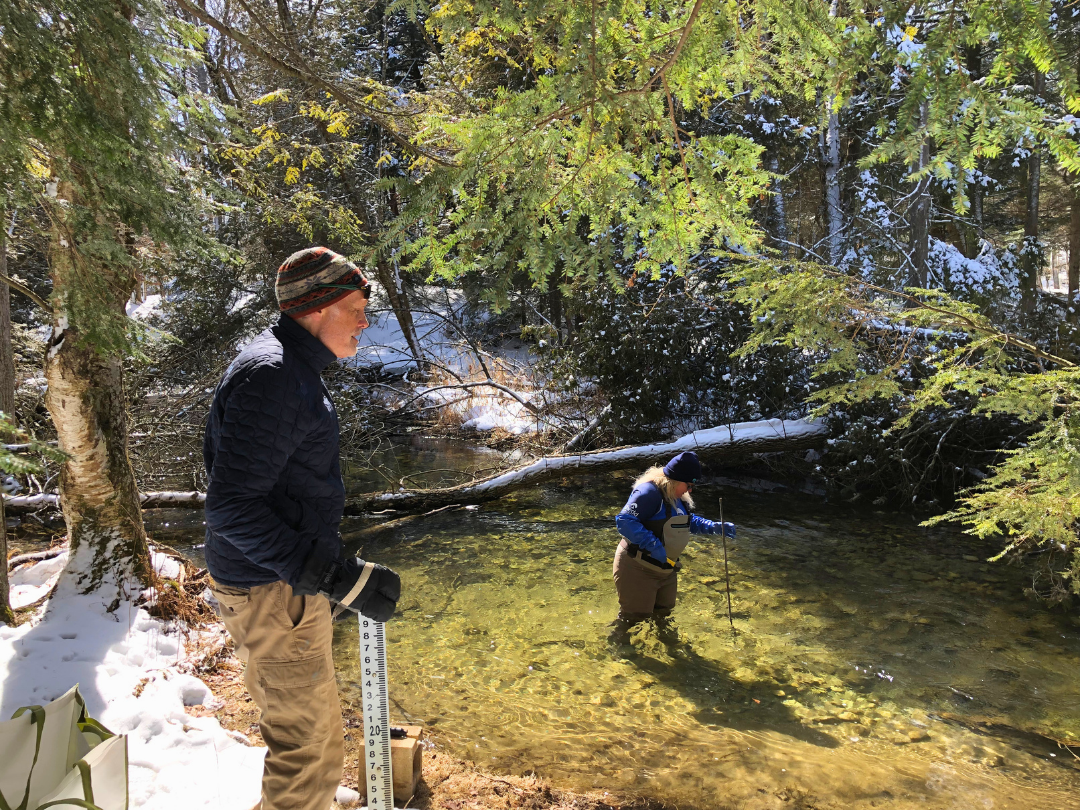

Through university partnerships and citizen science, researchers and volunteers are tracking biodiversity, forest restoration, and climate change impacts.
BAILEYS HARBOR, WI, UNITED STATES, October 22, 2026 /EINPresswire.com/ — “The ever-changing plant and animal populations of The Ridges make it mandatory for us to learn more about what exists within The Ridges, what factors cause changes in numbers of rare species, and how to maintain desirable vegetation and animal numbers in all Ridges habitats.” Roy Lukes, 1988.
These words spoken over 35 years ago are as significant now as they were then. The Ridges Sanctuary (TRS) has various research platforms by which this challenge is addressed.
TRS is fortunate to have several organizations and individuals who value its incredible diversity and assist in continuing to learn more about the organisms that comprise our varied communities through inventory and research projects. Because of this diversity, TRS provides an environment for outside researchers to conduct projects that enhance their academic and organizational information while providing tremendous benefits for The Ridges. Whether these studies are directed at gathering baseline inventory information, focused on the symbiosis of species, or trying to understand the intricate relationships between groundwater and Lake Michigan, each adds to the overall picture of the environment for us and future generations.
There are several ongoing inventory and research projects that provide valuable information regarding the communities that comprise the old “Baileys Harbor Bog” and beyond. This collaboration with external institutions helps provide answers to critical questions and assists in resource allocation decisions going forward for TRS. The University of Wisconsin-Green Bay continues to conduct numerous projects at the Sanctuary. One of the most recent is an attempt to quantify moss carbon sequestration in wetland areas. The University of Wisconsin-LaCrosse and the University of South Alabama are isolating and identifying the fungi present in orchid roots, and in one case, determining if this fungi type is changing with time. Not to be outdone, the University of Wisconsin-Madison has a significant ecohydrology project in place, providing data on the relationship between Lake Michigan levels, groundwater levels, swale water levels, and tree growth response.
Citizen Science remains the heart and soul of research at The Ridges Sanctuary. The numerous programs do not exist without incredible volunteer passion and expertise with international organization coordination. The Christmas Bird Count is part of the Audubon Society’s western hemisphere count, tracking bird population trends over the past 126 years. Locally, the data gathered indicates population changes, some indicative of a changing climate. In partnership with the Southern Wisconsin Bird Alliance, over 25 area eagle nests are monitored annually. In comparing nests throughout the state, trends and anomalies are recorded in the ongoing recovery efforts for these magnificent birds. Another bird recovery effort is tracked by the International Crane Foundation’s Annual Midwest Crane Count. On an early April morning, over 60 citizen scientists are counting cranes and reporting this data to accessible data bases. Population trends indicate, among other things, wetland preservation efforts.
Other Citizen Science connections include sucker monitoring with the Shedd Aquarium, plant phenology with the Chicago Botanic Garden, stream monitoring with the Wisconsin DNR and the University of Wisconsin Extension, dwarf lake iris research with the US Fish and Wildlife Service and The Ridges Sanctuary Forest School, and orchid research with the Smithsonian Environmental Research Center and the Minnesota Landscape Arboretum.
A recently implemented project at The Ridges Sanctuary captures the essence of these research collaborations. In partnership with the Climate Change Coalition of Door County (CCCDC) and the Lakeshore Natural Resource Partnership (LNRP), TRS is conducting a research initiative to study long-term trends in forest restoration. In trying to answer the following questions, the Boreal and Temperate Mesic Forest Climate Survivability Project commenced.
How will Door County’s forests be affected by climate change?
Which tree species will best tolerate climate change?
Will our Boreal forest ecosystems move further north?
What will be the larger environmental impact of these changes?
As conservation leaders and concerned community members, how should we respond?
Through the generosity of The Daybreak Fund, guidance from experts in this field, leadership from the executive directors of TRS and the CCCDC, and over 140 volunteers spending in excess of 1000 hours mapping grids, planting and tagging over 2,700 trees, collecting baseline data, and conducting inventories, this project intends to answer the aforementioned questions.
The 2,790 trees of numerous age classes and species are in 5 research plots in varied ecosystems. To reflect numerous scenarios, which the CCCDC’s Big Plant initiative encompasses, plots include open meadows, disturbed areas, and partially forested regions. Tree survivorship and carbon sequestration rates will inform numerous stakeholders, including the Big Plant coordinators, conservation groups, contractors, and private landowners into the future. Along with this information, onsite monitors have already detected the presence of seven bat species, including the endangered northern long-eared bat (Myotis septentrionalis), in addition to numerous other animal species. As a long-term project, tracking the impacts of reforestation on plant and animal communities is crucial. Preliminary survivorship data is already showing interesting and informative results. The overall survivorship rates average 86% for the 5 plots, with one plot at 95% and one plot at 52%. Longitudinal tracking of these experimental plots and adjacent control plots will provide the needed components for data-driven conservation decisions.
As the boreal forest is under increasing pressure, the knowledge that is gained through Citizen Science and collaborative projects provides the data that is necessary for informed decisions and resource allocation in protecting and preserving The Ridges Sanctuary in these challenging times.
Tony Kiszonas & Victoria Holderer
The Ridges Sanctuary
+1 9208392802
Visit us on social media:
LinkedIn
Instagram
Facebook
YouTube
Legal Disclaimer:
EIN Presswire provides this news content “as is” without warranty of any kind. We do not accept any responsibility or liability
for the accuracy, content, images, videos, licenses, completeness, legality, or reliability of the information contained in this
article. If you have any complaints or copyright issues related to this article, kindly contact the author above.

Media gallery
